
The dream of owning a short-term rental (STR) is a powerful one. You picture a beautiful property that not only pays for itself but also generates a healthy stream of passive income, all while serving as your personal getaway spot. To maximize profits, the first thought is often, “I’ll manage it myself. How hard can it be?”
You create a spreadsheet, list out the obvious expenses—mortgage, utilities, cleaning fees—and see a promising number at the bottom. But what that spreadsheet doesn’t show you is the real, hidden cost of self-management. It’s a cost measured not just in dollars, but in late-night phone calls, frantic searches for a plumber on a holiday weekend, and hours spent answering the same questions about the Wi-Fi password.
As seasoned professionals in the vacation rental space, we’ve seen countless ambitious owners dive into the world of self-management only to become overwhelmed. The truth is, the str management vs self managing debate is about more than just a line-item management fee. It’s about opportunity cost, peace of mind, and ultimately, the success and scalability of your investment.
This guide will pull back the curtain on the true, all-in self managing str cost, revealing the hidden financial drains and the priceless personal toll that your spreadsheet will never capture.
Table of Contents
- The Financial Costs Hiding in Plain Sight
- The Most Expensive Asset: Your Time
- The Guest Experience Gap: Why 5-Star Reviews Are Earned, Not Given
- The Proactive vs. Reactive Maintenance Trap
- Scaling Your Dream: The Self-Management Ceiling
- Conclusion: Reclaiming Your Investment and Your Life
- Frequently Asked Questions
The Financial Costs Hiding in Plain Sight
When calculating the cost of self-management, most owners focus on what they save by not paying vacation rental management fees. But they often overlook what they lose by going it alone.
Ineffective Pricing Strategy
The single biggest financial mistake self-managers make is static pricing. They set a weekend rate, a weekday rate, and maybe a holiday rate, and then leave it alone. This is like leaving a firehose of money on the ground.
Professional managers use sophisticated dynamic pricing software that analyzes hundreds of data points in real-time: * Local Events: Concerts, festivals, university game days (Go Gators!), and city-wide conferences. * Competitor Pricing: What are similar properties booking for right now? * Occupancy Trends: Is the market compressing for a specific weekend? * Seasonality & Holidays: Adjusting rates months in advance for peak and shoulder seasons. * Day of the Week: Pricing a Tuesday differently than a Thursday.
This software ensures you’re never underpriced during a high-demand weekend, but also that you’re not overpriced and sitting empty during a slow week. This optimization alone can increase revenue by 20-40%, often completely covering the cost of professional management fees.
The Marketing & Photography Tax
Your iPhone photos might look great on your personal social media, but they won’t cut it in a competitive rental market. Professional real estate photography is a non-negotiable, and it’s an upfront cost self-managers bear. * Professional Photos: $300 - $800+ * Drone/Video Tours: $500 - $1,500+
Beyond photos, there’s the time and skill required to write compelling, SEO-optimized listing descriptions. You need to know how to sell the experience, not just list the number of beds. A professional manager has an in-house team or a roster of proven photographers and copywriters, often at a discounted volume rate.

The Vendor Network Deficit
It’s 10 PM on a Saturday, and your guest calls. The hot tub isn’t heating up. You start frantically Googling “24/7 hot tub repair near me” and brace for the emergency call-out fee.
A professional property manager has a curated network of vetted, reliable, and insured vendors—plumbers, electricians, HVAC technicians, hot tub specialists—who they work with regularly. This relationship means: * Priority Service: Their vendors will often prioritize a manager’s call over a one-off homeowner. * Preferred Pricing: They receive volume discounts that are passed on, saving you money. * Trust and Reliability: They know the job will be done right the first time.
That emergency call that costs a self-manager $400 and a ruined Saturday night might cost a managed property $200 and be resolved by the next morning without the owner even knowing about it until they see the report.
The Most Expensive Asset: Your Time
This is the “cost” that never appears on a P&L statement but has the biggest impact on your life. If you value your time—and you should—the hours you spend on menial management tasks are a significant expense.
Let’s break down the roles you inherit as a self-manager:
Role 1: The 24/7 Booking Agent & Concierge
- Answering initial inquiries (often at all hours).
- Replying to the same questions repeatedly (“Is the kitchen well-stocked?”).
- Sending check-in instructions and access codes.
- Being on-call for any mid-stay questions or issues.
- Sending check-out reminders and soliciting reviews.
Role 2: The Operations Coordinator
- Finding, vetting, and scheduling cleaners.
- Coordinating cleaners with guest check-out and check-in times (often a tight window).
- Scheduling landscapers, pest control, and pool/hot tub maintenance.
- Managing laundry and linen turnover.
- Restocking consumables like toilet paper, coffee, and soap.

Role 3: The Problem Solver
- Handling guest complaints and navigating tricky situations.
- Troubleshooting the Wi-Fi or the smart TV over the phone.
- Dealing with unexpected issues like a power outage or a plumbing leak.
- Managing difficult guests or unauthorized parties.
Let’s do some quick math. A conservative estimate is that a self-manager spends 10-20 hours per month on these tasks per property. If you value your time at just $50/hour, that’s $500 to $1,000 per month in “time cost.” Suddenly, that 20-25% professional management fee doesn’t seem so high, does it?
The Guest Experience Gap: Why 5-Star Reviews Are Earned, Not Given
In the world of short-term rentals, reviews are everything. A stream of 5-star reviews leads to higher search rankings, more bookings, and the ability to command higher nightly rates. A few 3 or 4-star reviews can sink your listing.
The difference often comes down to the guest experience, and this is where professional management creates a significant gap.
Consistency is Key
A guest booking a professionally managed property knows what to expect: professional cleaning standards, hotel-quality linens, clear and timely communication, and a well-maintained home. Self-managed properties can be a gamble. One might be spotless, while the next has dirty floors and a lumpy mattress. This inconsistency is a risk many travelers are unwilling to take.
For example, our Epic Family Home is packed with incredible amenities like mini-golf, a sauna, and a hot tub. But what truly makes it a 5-star experience is the invisible work behind the scenes. The hot tub is professionally serviced before every arrival, the mini-golf course is clean and ready for play, and the entire home is immaculately prepared. That level of detail and consistency is the hallmark of professional management.

Hyper-Local Expertise
A great host does more than provide a key; they provide a curated local experience. Professional managers have teams on the ground who live and breathe the local area. They can provide tried-and-true recommendations for the best coffee shop, the hidden hiking trail, or the most family-friendly restaurant. This local touch elevates a simple stay into a memorable vacation, and it’s a full-time job to cultivate that knowledge.
Flawless Problem Resolution
Things will inevitably go wrong. The Wi-Fi will go out. A pipe will leak. The key is how quickly and professionally these issues are resolved. A self-manager living hours away is at a massive disadvantage. A professional management team can deploy a maintenance person or a guest services agent in minutes.
This ability to turn a potential disaster (and a 1-star review) into a positive experience (“The host was so responsive and fixed the issue immediately!”) is a superpower of professional management.
The Proactive vs. Reactive Maintenance Trap
Self-managers often operate in a reactive mode. They fix things when they break. This is not only more expensive in the long run (emergency repairs cost more than preventative maintenance), but it also impacts the guest experience directly.
Professional managers operate proactively. They have comprehensive checklists and scheduled maintenance programs for every property: * Quarterly: Test smoke/CO detectors, change HVAC filters, deep clean appliances. * Bi-Annually: Inspect roof and gutters, service HVAC systems, check for leaks under sinks. * Annually: Pressure wash exteriors, service major systems like water heaters.
This preventative approach protects your asset, saves money over time, and ensures that guests aren’t the ones discovering that the A/C is broken on the hottest day of the year. For properties in demanding climates, like a beachfront condo exposed to salt and sun, this is absolutely critical.
Our On the Beach condo in Panama City Beach, for example, requires constant, proactive attention to things like HVAC filters (sand and salt air are brutal) and sliding door tracks to ensure every guest enjoys those stunning ocean views without a hitch. A distant, self-managing owner would struggle to keep up.

The Self-Management Ceiling
Perhaps you dream of owning a portfolio of five, ten, or even twenty vacation rentals. If you’re self-managing, you’ll hit a hard ceiling very quickly. Most find that managing one or two properties is more than a full-time job.
Trying to coordinate cleaners, guests, and maintenance across multiple properties, potentially in different cities, is a recipe for burnout and failure. Your systems will break down, guest experiences will suffer, and your reviews will plummet.
Professional management is the key to scalability. It allows you to focus on what you do best—finding and acquiring new properties—while the management partner handles the complex, day-to-day operations. It transforms your active job as a landlord into a truly passive investment.
Consider the logistics of managing multiple properties in a city like Gainesville, FL, with its waves of students, parents, and sports fans. A property like our cozy townhome at 1023 SE 4th Ave needs to be perfectly turned over and ready for a new set of Gators fans just hours after the last group checks out. Now imagine doing that for five other properties on the same game day. It’s a logistical challenge that requires a dedicated team.
Conclusion: Reclaiming Your Investment and Your Life
The decision of str management vs self managing is one of the most critical you’ll make as a property owner. While the allure of saving on management fees is strong, the reality is that the true self managing str cost is often far greater.
It’s the lost revenue from suboptimal pricing. It’s the premium you pay for emergency repairs. It’s the hours spent on guest communication instead of with your family. It’s the stress of being on-call 24/7.
By partnering with a professional property manager like Springline Stays, you’re not just hiring a service; you’re buying back your time, investing in peace of mind, and leveraging a team of experts dedicated to maximizing your property’s potential. You’re shifting from being an overworked landlord to being a savvy, passive investor.
The dream of vacation rental ownership doesn’t have to be a nightmare of logistics. See the difference professional management makes.
Ready for a stress-free getaway? Explore our portfolio of impeccably managed properties and book your next vacation directly with Springline Stays.
Frequently Asked Questions
What are the average vacation rental management fees?
Vacation rental management fees typically range from 20% to 40% of the gross rental revenue. The exact percentage depends on the market, the scope of services provided (e.g., full-service vs. marketing-only), and the type of property. While this may seem high, a good manager often increases total revenue by more than the fee itself through dynamic pricing, higher occupancy, and 5-star reviews.
Is it worth it to self-manage a short-term rental?
Self-managing can be worth it if you live very close to your property, have a flexible schedule, possess strong marketing and hospitality skills, and have a reliable network of local vendors. However, for most owners, especially those who live remotely or value their time, the hidden costs in time, stress, and lost revenue potential often outweigh the savings from not paying a management fee.
What are the biggest challenges of self-managing an STR?
The biggest challenges include: 1) 24/7 guest communication and support. 2) Managing cleaning and turnover logistics, especially for same-day check-ins. 3) Finding reliable and affordable vendors for maintenance and emergency repairs. 4) Implementing effective dynamic pricing to maximize revenue. 5) Staying compliant with ever-changing local laws, permits, and taxes.
How does a property manager increase my rental income?
A professional property manager increases income in several key ways. They use dynamic pricing software to ensure your property is always priced optimally, leading to higher revenue per booking. They create professional listings and marketing campaigns to increase visibility and occupancy. Their focus on a flawless guest experience generates 5-star reviews, which boosts your listing’s ranking and allows for higher rates. Finally, they can often secure more bookings through direct booking channels, avoiding hefty OTA commissions.
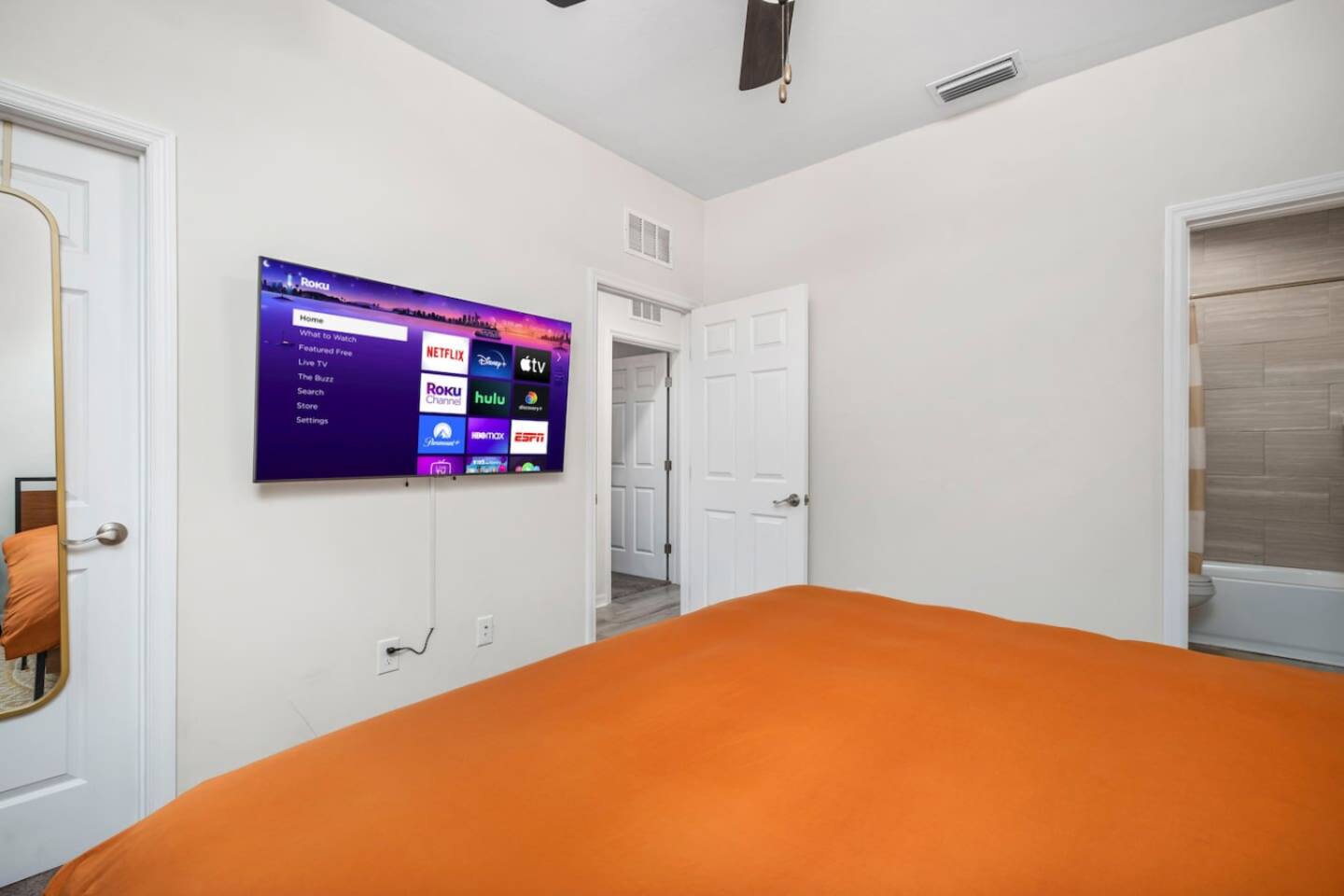 Walk to University, Pet Friendly, Cozy Townhome — Book your stay →