
The dream is enticing: you buy a beautiful property in a desirable location, list it online, and watch the bookings—and the passive income—roll in. To maximize your profit, you decide to manage it yourself. After all, how hard can it be to answer a few emails and coordinate a cleaner? You get to keep 100% of the revenue, call all the shots, and create a guest experience that’s truly your own.
On paper, it’s a brilliant strategy. But as veteran property managers and investors, we’ve seen the other side of that coin. The reality of self-managing a short-term rental (STR) often looks less like a passive income stream and more like a demanding, all-consuming second job.
The real self managing str cost isn’t just about the money you spend on supplies or marketing; it’s measured in late-night phone calls, lost weekends, and the constant, nagging feeling that you’ve forgotten something critical. It’s the difference between a thriving asset and a stressful liability.
In this guide, we’ll pull back the curtain on the true price of the DIY approach, exploring the hidden costs in time, expertise, and guest satisfaction that rarely make it onto a spreadsheet.
Table of Contents
- The Invisible Currency: Your Time
- The Expertise Gap: What You Don’t Know Can Hurt You
- The Guest Experience Rollercoaster
- The True Financial Tally: Beyond Management Fees
- Conclusion: Reclaim Your Investment (and Your Life)
- Frequently Asked Questions
The Invisible Currency: Your Time
When you calculate the profitability of your STR, do you pay yourself an hourly wage? Most self-managers don’t, and that’s the biggest accounting error they make. Your time is your most valuable, non-renewable resource. When you self-manage, you’re trading it for tasks that a professional could handle more efficiently.
Guest Communications: The 24/7 Concierge
The inquiries start rolling in at all hours. A potential guest from a different time zone has a question about pet policies at 2 AM. A current guest can’t figure out the smart lock at 11 PM. Another just checked out and wants to know if they left their phone charger.
This isn’t an exaggeration; it’s the daily reality. Being a successful host means being responsive, helpful, and unfailingly polite, even when you’re interrupted during dinner, a movie, or your child’s soccer game. This constant availability is a significant time and energy drain.
Coordination Chaos: Juggling Cleaners, Handymen, and Landscapers
A professional property manager has a deep bench of vetted, reliable vendors. A self-manager has Google and a prayer.
Imagine this scenario: A guest checks out at 10 AM, and your next guest arrives at 4 PM. In that six-hour window, you need to: * Confirm your cleaner is on their way. * Get a report of any damage or missing items. * Discover the dishwasher is leaking and find a plumber who can come today. * Call a handyman to fix the wobbly chair the last guest mentioned. * Ensure the hot tub is serviced and balanced.
Each of these tasks requires phone calls, scheduling, and follow-up. If one piece of the puzzle fails—the cleaner gets a flat tire, the plumber is booked for a week—the entire guest experience collapses, and your five-star rating is in jeopardy.

The Marketing Maze: Listings, Photos, and Pricing
Simply putting your property on Airbnb isn’t enough. To truly compete, you need to be a part-time marketer, photographer, and data analyst. This includes: * Writing compelling listing descriptions tailored to each platform (Airbnb, Vrbo, etc.). * Arranging for professional photography that makes your property shine. * Constantly updating your calendar across multiple sites to avoid double bookings. * Analyzing market data to adjust your pricing for seasonality, local events, and competitor rates.
This isn’t a “set it and forget it” task. It requires ongoing effort and a keen eye for market trends to ensure you’re not leaving money on the table.
The Expertise Gap: What You Don’t Know Can Hurt You
In the battle of STR management vs self managing, expertise is a force multiplier. Professional managers bring years of industry-specific knowledge that a DIY host simply can’t replicate overnight. This gap can lead to costly mistakes.
Dynamic Pricing: Leaving Money on the Table
Many self-managers set a flat nightly rate, perhaps with a slight increase for weekends or holidays. This is one of the most significant sources of lost revenue.
Professional managers use sophisticated dynamic pricing software that analyzes hundreds of data points in real-time: * Local events (concerts, festivals, university game days) * Competitor occupancy rates and pricing * Flight and hotel booking trends * Seasonality and holiday demand * Day of the week
This data-driven approach means your property is always priced optimally—high enough to maximize revenue during peak demand and competitive enough to secure bookings during the slow season. A professional can often increase a property’s revenue by 15-25% through pricing strategy alone, an amount that frequently covers the entire management fee.
Navigating the Legal Labyrinth: Permits, Taxes, and Regulations
The world of short-term rentals is a patchwork of local, state, and federal regulations. Do you know your city’s permit requirements? Are you collecting and remitting the correct transient occupancy taxes? Is your insurance policy adequate for a commercial rental operation?
Answering these questions incorrectly can lead to hefty fines or even a shutdown of your business. A professional management company is an expert in local compliance, ensuring your property operates legally and protecting you from unforeseen liabilities.
Marketing and SEO Mastery
Getting your property seen by the right people at the right time is an art and a science. Professionals have a multi-channel marketing strategy that goes beyond the major OTAs (Online Travel Agencies). They leverage direct booking websites (like SpringlineStays.com), email marketing, social media, and search engine optimization (SEO) to build a brand and drive high-value, repeat bookings. This reduces reliance on platforms like Airbnb and Vrbo, saving you money on booking fees.
The Guest Experience Rollercoaster
Ultimately, your success hinges on one thing: happy guests who leave glowing reviews. This is where the difference between amateur and professional management becomes crystal clear.
Consistency is King
A guest booking a professionally managed property has a certain expectation of quality. They know the home will be impeccably clean, stocked with essential amenities (toilet paper, soap, coffee), and that all appliances will be in working order.
This consistency is hard for a self-manager to achieve. You might have a great cleaner, but what happens when they go on vacation? You might stock the essentials, but do you have a system to ensure they’re never forgotten?
For example, a property like the Epic Family Home: Mini-Golf, Sauna, Hot Tub, Games requires a level of operational excellence that’s nearly impossible for a single person to maintain. Between servicing the hot tub, maintaining the sauna, and ensuring the mini-golf course is pristine for every guest, a team-based professional approach is essential to delivering the “wow” factor that earns five-star reviews.

Problem Solving on the Fly
Things go wrong. It’s inevitable. The Wi-Fi goes out. A storm knocks out the power. A guest accidentally locks themselves out at midnight.
For a self-manager, every problem is a personal crisis that requires immediate attention. For a professional manager, it’s a routine issue with a standard operating procedure. They have 24/7 guest support lines and on-call maintenance staff ready to resolve issues quickly and efficiently, often before the guest becomes truly frustrated. This ability to turn a potential disaster into a minor inconvenience is a hallmark of a professional operation and is invaluable for protecting your property’s reputation.

The True Financial Tally: Beyond Management Fees
Many owners get fixated on the 20-30% vacation rental management fees and see it as a pure expense. It’s time to reframe that thinking. That fee isn’t a cost; it’s an investment in a service designed to protect your asset, maximize its revenue, and give you back your freedom.
The Cost of a Bad Review
How much is a five-star rating worth? In the competitive STR market, it’s everything. A string of perfect reviews pushes you to the top of search results and builds trust with potential guests. Conversely, just one or two bad reviews—perhaps because the property wasn’t perfectly clean or a maintenance issue wasn’t resolved quickly—can bury your listing and scare away future bookings. The lost revenue from a damaged reputation can easily exceed a year’s worth of management fees.
Lost Revenue from Inefficient Pricing & Marketing
As mentioned earlier, a professional pricing strategy can boost revenue by 25% or more. Let’s do some simple math. If your self-managed property grosses $50,000 a year, a 25% increase is an extra $12,500. A 25% management fee on the new total ($62,500) would be $15,625. In this scenario, professional management has generated almost enough additional revenue to pay for itself, before accounting for any time savings or cost reductions.
Bulk Discounts and Vendor Relationships
Professional management companies manage dozens, if not hundreds, of properties. This scale gives them significant buying power. They get commercial discounts on everything from linens and coffee to cleaning supplies and replacement appliances. Their long-standing relationships with plumbers, electricians, and other technicians often mean priority service and better rates than a homeowner could secure on their own. These small savings add up, chipping away at the net cost of the management fee.
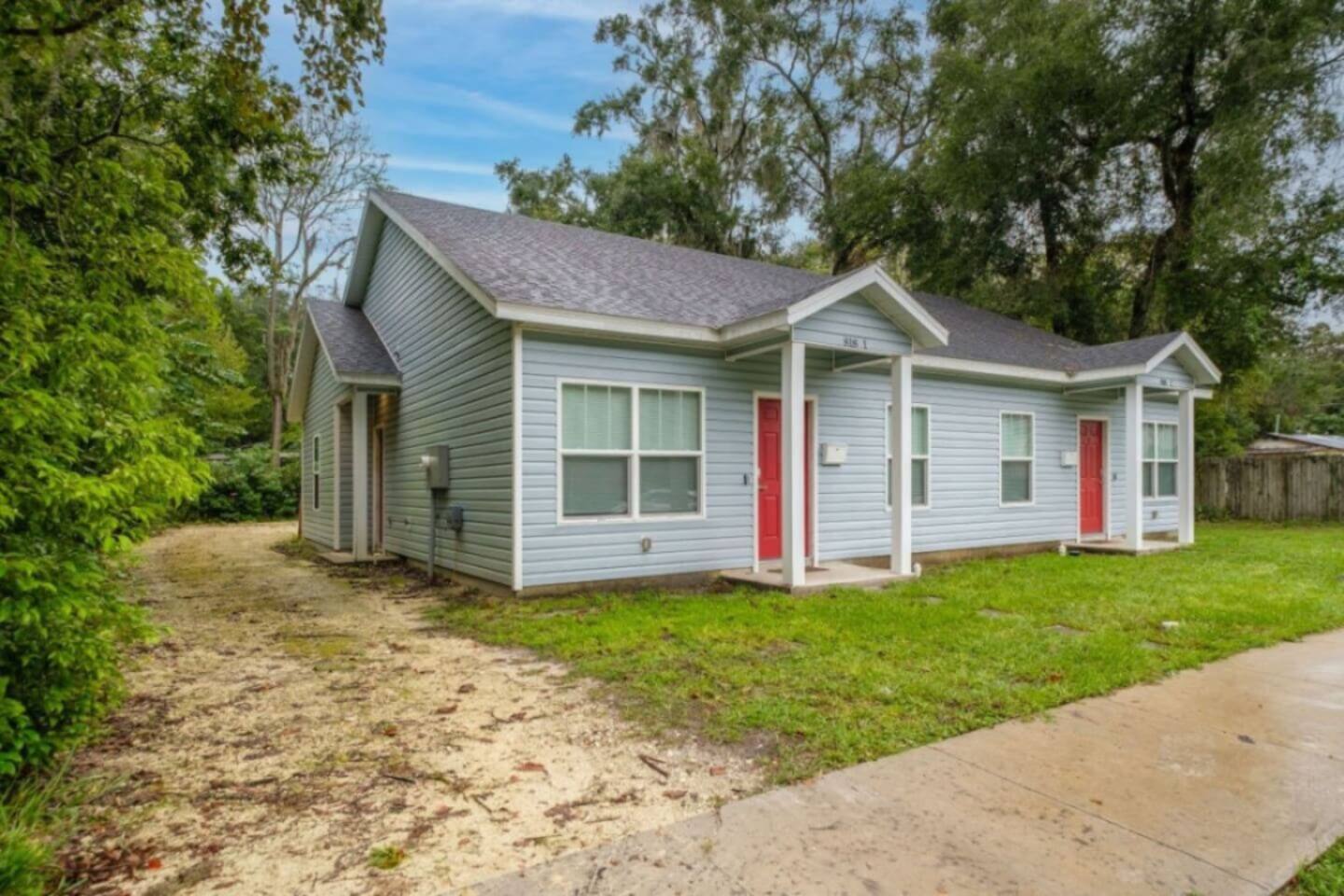
Consider a property that thrives on location and seamless turnover, like the Walk to UF Stadium, No Cleanup, Cozy Townhome. Located just a stone’s throw from Ben Hill Griffin Stadium near 1023 SE 4th Ave, Gainesville, FL, its prime value is convenience for game days and university events. A professional manager ensures this property is perfectly turned over every single time, with a streamlined check-in/out process that gets five-star reviews for efficiency, justifying a premium nightly rate during peak weekends.
Conclusion: Reclaim Your Investment (and Your Life)
Self-managing your short-term rental can seem like a great way to save money, but the hidden costs are substantial. When you factor in the value of your time, the revenue lost to suboptimal pricing, the risks of non-compliance, and the stress of 24/7 guest service, the DIY approach often proves to be a false economy.
Partnering with a professional property manager like Springline Stays transforms your STR from a demanding second job back into what it was always meant to be: a smart, profitable, and truly passive investment. You provide the property; we provide the expertise, systems, and peace of mind.
Ready to see what your property can achieve with professional management, or experience the difference as a guest? Explore our collection of flawlessly managed vacation rentals and book your next getaway directly with Springline Stays to save on platform fees.
Frequently Asked Questions
Q1: What is a typical vacation rental management fee?
Most full-service vacation rental management companies charge a commission-based fee that ranges from 20% to 35% of the gross rental revenue. This fee typically covers all aspects of management, including marketing, guest communication, cleaning and maintenance coordination, dynamic pricing, and financial reporting.
Q2: Is it worth it to self-manage a short-term rental?
For some owners with a single property in their hometown and a lot of free time, self-management can be viable. However, for most investors, especially those with properties in other cities or those who value their time, it is often not worth it. The expertise of a professional manager can increase revenue and occupancy enough to offset the management fee, while also eliminating the stress and time commitment of the DIY approach.
Q3: How much time does it take to self-manage an STR?
On average, a self-managing host can expect to spend 8-10 hours per week per property. This includes time spent on guest communications, marketing, pricing adjustments, coordinating cleanings, and managing logistics. This time commitment can increase significantly if unexpected maintenance issues arise.
Q4: What are the biggest hidden costs of self-managing an STR?
The biggest hidden costs of self-managing are not on a P&L sheet. They are: 1) Opportunity Cost: The value of your time that could be spent on your primary career, with family, or on other investments. 2) Lost Revenue: Money left on the table due to unsophisticated pricing, poor marketing, and lower occupancy rates. 3) Burnout: The mental and emotional toll of being “on-call” 24/7 to handle guest needs and emergencies.
 On the Beach | Ocean Views | Sleeps 6 — Book your stay →
 Views | 2 mins to OCC | Fire Pit | Games | Pets — Book your stay →